
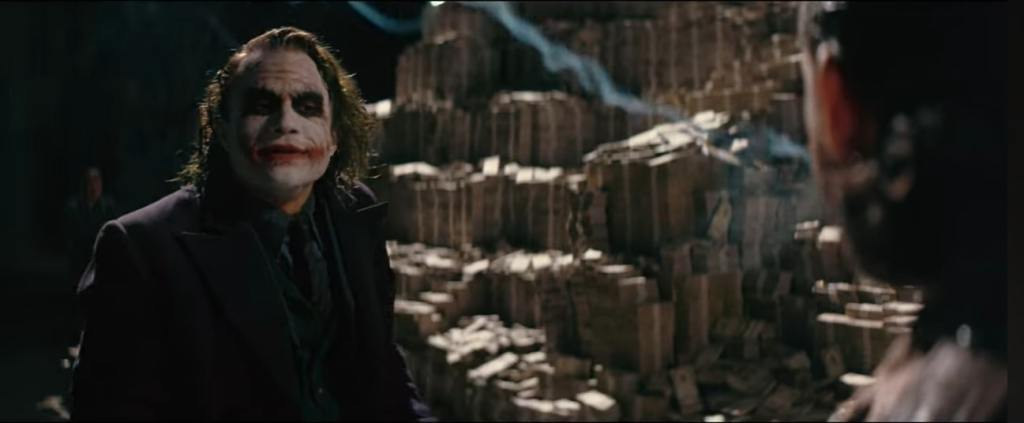
This site has been tracking the complicated events in Syria ever since the surprising fall of the Assad régime, which we ascribed metaphorically at the time to interference by the Joker. Then in an article on the 18th of January we covered what was called THE TURKISH GAMBIT IN SYRIA – an attempt to explain what took place in Syria in the light of the fact that it was clear that Turkey had been a prime mover in those events.
But little was said about Russia, apart from the fact that with Putin’s focus on Ukraine, there appeared to be little interest in Syria. It looked like Syria had become a dumping ground for incompetent generals. And this seemed to have led to a weakening of Russian military capability, and ultimately thus to the half-hearted response by Russian forces to the attack in Aleppo at the time by Hay’at Tahrir al-Sham or HTS, which started everything off.
But that judgement left in the air the whole question of why Russia had never protected Syria from Israeli air raids in the first place, although it had a fearsome array of S-400 air defence systems in its airbase in Khmeimim in Northern Syria. The other related question that was never answered was why relations between President Assad of Syria and former Iranian president Ibrahim Raisi turned sour almost from the time Raisi became president in August 2021. Raisi had proposed installing advanced air defence systems in Syria to do what Russia wouldn’t. But Assad had refused.
It appeared that Assad, under pressure from Russia had taken the position that Syria would not be a “supporter” of the resistance in Lebanon, but rather had sought to limit his role to one of a “facilitator.” This would be in the sense that he would tolerate the use of Syrian territory as a logistical conduit for weapons and supplies, but that was all. The lack of air defences naturally meant constant and costly Israeli air raids as far as Iranian advisers and personnel in Syria were concerned. In fact – and this is an important point – Hezbollah leader, Hassan Nasrallah, sought at the time to accommodate Assad’s ambivalent stand, even stopping Raisi from taking more forceful action. At that time Hezbollah was repairing its Arab image, responding to strong Arab sensitivities about excessive Iranian influence in Syria. This political strategy on Nasrallah’s part – taking Hezbollah back into the Arab fold – would be successful, as we noted in an article on 29 June 2024, when the Arab League revoked Hezbollah’s designation as a terrorist organisation.
The article did note, in respect of all these facts, the strange triangular relationship between Russia, Israel and Iran. Even as Syria formed a route for the supply of arms from Iran to Hezbollah in Lebanon, this would be monitored by Israel under an agreement with the Russian forces based at Khmeimim. This gave the Zionist entity a certain degree of freedom to operate in the skies above Syria. However, the motives that Russia might have had for this policy where not clear at the time.
In respect of the actual events relating to the fall of Assad, the 18th January article stressed that if Erdoğan hadn’t given his green light, Hay’at Tahrir al-Sham – HTS for short – couldn’t have exited the northwestern Syrian enclave of Idlib to carry out the attack against Aleppo which started the whole thing off. HTS had been kettled in Idlib by Turkish troops for years. Now of course, after the fall of Assad, we have the HTS leader, trading under his real name of al-Shara’a, surrounded by ministers of dual Syrian-Turkish citizenship, appointed by the Turkish state, and monitored 24/7 by the office of Turkish Intelligence, or MIT for short, within the confines of the presidential palace.
Understanding Erdoğan’s motives at the time had to do with the approach of his end of term as president, as well as the fear on the part of his ally and kingmaker, Turkish politician Devlet Bahçeli, that the Nationalist Party, which he led, would soon lose its extremely powerful position in Turkish politics. This position has taken Turkish politics sharply to the right since 2015. The whole Turkish gambit in Syrian was now fronted by Bahçeli. It was all about gaining control of the situation in Syria, forcing the Kurds to reject the violent approach to achieving their maximal demands for an independent state, and change tack instead to back their own Kurdish politicians within Turkey to pledge engagement with the democratic process. This would mean renouncing their claim to parts of Turkey for their imagined Kurdish state.
Erdoğan and Bahçeli could then count on a potential new ally in the Turkish parliament to add the necessary votes to call for early elections and give Erdoğan, under the constitution, the ability to have a third go at the presidency.
The Turkish establishment, led by Bahçeli, has since convinced imprisoned leader of the PKK, the militant Kurdistan Worker’s Party, Abdullah Öcalan, to call on the military wing of the Kurdish movement to stand down and restart the peaceful process which they interrupted in 2015. That was the time when Kurdish leaders in Kurdish umbrella organisation, the KCK (or Group of Communities in Kurdistan) decided to wage war against Turkey instead of backing the democratic prospects of the HDP Kurdish Party in Turkey. The HDP had achieved an astonishing 12% of the national vote with the backing of the left in 2015, despite the fact that conservative Kurdish voters had shunned them (remember: the PKK is a Marxist organisation stuck ideationally in the 1960s, and that members of the HDP were close to the PKK). When Bahçeli subsequenly rescued Erdoğan’s AKP from a position of not having enough votes to institute constitutional change in 2015 to go to a mixed presidential instead of a pure parliamentary system, Turkish politics went sharply to the right. The Kurdish decision to go for the gun rather than the ballot is what essentially allowed that to happen.
But things are not yet completely sown up for Turkey and the Erdoğan-Bahçeli team, however. Syrian Kurdish leader Saleh Muslim announced that Öcalan does not represent his people. This is essentially a signal that Saleh and the Kurds in Syria are going to drive a hard bargain on the price the Kurdish politicians within Turkey are going to ask for their cooperation.
Russia’s Game
So now, new revelations have enabled a fuller picture to be drawn of the events surrounding Assad’s fall. It was never quite clear why it was that Erdoğan was able egg on his forces (HTS, followed by the Syrian National Army – SNA- made up of the Syrian opposition) all the way to Damascus, when in fact all expectations were that a major battle with Assad’s Syrian Arab Army (SAA) would take place in Aleppo. Instead the SAA folded. Not only did it withdraw in order from Aleppo, but also then from Hama, Homs and then Damascus. It just melted away.
It has become clear that Russia was holding Assad as a pawn in the great game with the United States. It would be Russia that gave Erdoğan the ability to tell the Iranians, who were getting ready to support the SAA, that the game was over. Russia’s initial response, launching airstrikes against HTS and the SNA, was mere show, or perhaps it was an indication that behind-closed-doors negotiations with the United States were still in the balance. These initial moments in the events leading up to Assad’s fall were not dissimilar to Putin’s yes-I-will, no-I-won’t, yes-I-will decision-making process of 24 February 2022, when he finally decided to invade Ukraine.
New crucial facts have been revealed by a Syrian journalist close to elements within Assad’s presidential guard. Nidal Hamada told Lebanese journalist Roula Nasr, that Bashar Al-Assad, the president of Syria was taken away by a Russian armed guard to the Russian naval base near Latakia, where he was bluntly told that his rule had ended. You first heard this here, where Hamada reveals various facts about his new book the Fall of Damascus. Assad told his presidential guard to stand down when the Russians came for him. When Assad left Damascus under guard, burning all his papers in the process, the news spread like wildfire, naturally causing SAA generals on the battlefield to withdraw.
Israel’s immediate invasion of the southern provinces of Syria is also explained by the fact that negotiations were ongoing between Russia and the United States on Assad’s position. The middleman in these negotiations was a Syrian ally of Erdoğan, close to the Turkish Baykar defence conglomerate, run by Erdoğan’s son-in-law, Selçuk Bayraktar. Khalid al-Fayoumi had licenced drone manufacturing plants in Ukraine from Baykar. These have been an important factor on the Ukrainian battlefield against the Russians.
Turkey has in fact been in the odd position throughout the Ukraine War of supporting Ukraine while, at the same, breaking all US and EU sanctions against Russia and even prohibiting NATO naval intrusion into the Black Sea on the basis of the 1934 Montreux Convention.
The complex relationship between Erdoğan and Putin actually began when Putin boxed Turkey in geopolitically, with the theatre surrounding the shooting down of a Russian jet on the border between Syria and Turkey, on 24 November 2015. Putin imposed harsh economic sanctions on the Turkish economy. After Erdoğan publicly apologised and repented for something he had nothing to do with, Putin triumphally lifted all sanction, giving the Turkish economy a major fillip, then later went on to save him from the attempted coup in July 2016 organised by Fethullah Gülen. Putin gave him advance information about the coup, while the Turkish leader was on holiday near Bodrum. Erdoğan narrowly avoided assassination by immediately taking a flight to Istanbul.
Be all that as it may, in the Syrian theatre of later 2024, Israel was informed of developments blow-by-blow and moved into Syria as soon as it could. The United States didn’t engineer the fall of Assad. Russia did. The United States, however – it appears – did give its go ahead on the deal on the basis that Erdoğan would not launch a full scale attack on the Kurds in Eastern Syria. He would have to negotiate a settlement with them. But he would not be opposed in his rush to take over Damascus.
These revelations throw some light also on still ongoing the debate as to whether President Trump will or will not accept Putin’s rather harsh terms for peace. The Euroamerican neoconservative deep state represented by English PM Keir Starmer is asking for a ceasefire without final terms and the presence of English peacekeepers on the ground – a la Korea.
However, after visits by Starmer and Macron, the Trump administration – that is Trump and Vance together – gave their answer. They gave Zelensky the most incredible carpeting of a foreign leader that the Oval Office must have seen in its history [blow by blow analysis in postscript below]. The message was clear. All hopes of the US participating in even a symbolic way in the continued Bidenesque farce in Ukraine were lost. If Putin wants a neutral Ukraine, with new leadership that isn’t anti-Russian, and a comprehensive peace treaty, that is what he will get. Steve Witkoff has already indicated that the basis for a future treaty will be the Istanbul document of March 2022, a document that until today the Western media never acknowledged existed.
Finally, the Arab League summit on March 4 over the Gaza question will take all this into account leaving the possibility open that Syria may be traded for Palestine in some form or other. Has the Putin manoeuvre in Syria given Trump room to be a disruptor even on Palestine? Or as the last post on this site suggests, will the revolutionary changes born of his narcissistic drive to be remembered as a great president fail, because they come from a strict menu set out by the prejudices of his MAGA base and the Zionists he has surrounded himself with? Who knows? Watch this space. See you on March 5.
Postscript on interview Trump/Vance/Zelensky: The action really starts when J. D. Vance comes into the conversation which, unusually, turns into a brawl in front of the gathered press in the Oval Office. This happens @35.55 mins when Vance talks about the need for diplomacy, but more seriously @ 42.23 when he starts berating Zelensky about lying and the mismanagement of the war and his country: ‘you are forcing conscripts onto buses.’ Trump then gets really angry with Zelensky @ 49.55 mins, but there are some very interesting things being said throughout. From the beginning, the action seems to start when a journalist obviously close to the Trump team starts asking Zelensky why he isn’t wearing a suit in the highest office in the land @ 18:45 mins. We know that he close to the Trump team because he softballs a question @ 17.26 mins which allows Trump to say that ‘I hope I’m going to be remembered as a peacemaker,’ adding that he wants to save lives more than he wants to save money. After that, Trump says ‘thank you Brian that was a nice question.’ At 23.12 mins Trump starts picking up on suit theme. But the main two themes which Trump keeps harping on after that point are: that Biden is a stupid incompetent and the Ukraine War shouldn’t ever have started, and that he has made a deal with Putin, insisting throughout that he has deal with Putin and that it is good solid deal (especially @ 29:31 mins and @ 37: 18 mins). Zelensky lies throughout about the facts of the war and Vance tells him ‘you are wrong,’ but Trump gets visibly irritated when Zelensky says that Putin doesn’t keep to his agreements. At 23:58 mins Trump tells Zelensky that Putin doesn’t break his word, after Zelensky tells him that Putin broke ‘his signature’ 25 times. There is a crucial statement Trump makes that might have important implications for how the situation in the Middle East develops. After Trump says @22:20 mins that if he’d been in charge there would have been no Ukraine War, he says at @22.23 that there would also have been no October 7. What he probably means here is that there wouldn’t have been the response to October 7, which he implicitly blamed on ‘the incompetent’ Biden for. All very interesting for the future.
 Globalshiffft
Leave a comment