
Al-Aqsa Flood (Tufaan al-aqsa) was the name given to an action by the Qassam brigades, the military wing of Hamas on 7 October 2023. The decision for the action was taken by the Hamas political leader in Gaza, Yahya al-Sinwar, after weeks of distressing news about the conditions of Palestinians being arbitrarily held in Israeli prisons, the interference by Israeli authorities with stipends assigned to Gazan families by Qatar, and the sudden inexplicable cancellations of the right of some Gazans to work in Israel, together with the hopelessness of any progress on the Palestine question.
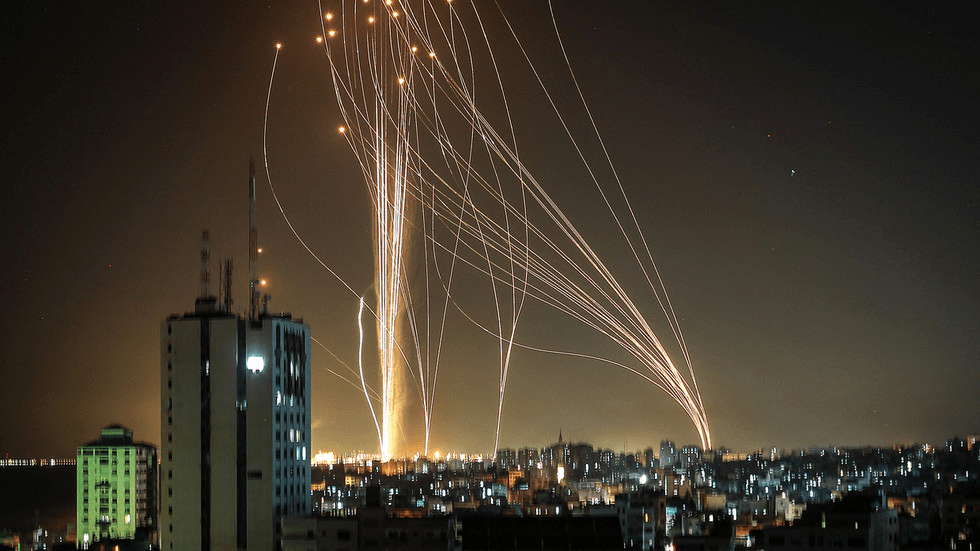
On Friday 6 October at 11 pm routine drills were called by the Hamas military leader, Mohammed Deif, after which 1,500 fighters were surreptitiously selected to stay behind, who would lead the attack, as the remainder retired for the night. They were isolated and their means of communication disabled as they were made aware of the attack plans. At 6.30 am local time the next day an initial barrage of 5,000 multi-range rockets were fired from Gaza into Israel. This was used as cover for a multipronged infiltration through holes blown through the electronic fences that surrounded Gaza. Some used motorcycles, others went by sea using motorboats, and some flew over the fence using paragliders.
The Israeli military didn’t pick up the infractions, despite 3,000 fighters ultimately being involved, with another 1,500 providing support, as the news of the attack spread within Gaza itself. Within half an hour from the start of operations, which attacked the Israeli military installations surrounding Gaza at 15 different points, the Qassam Brigades had taken over the southern military command headquarters, and disabled its communication systems. They downloaded security files from its computers that held information about Israel’s security arrangements in the entire southern sector (half of Israel) onto memory sticks, and then returned to base with caches of weapons and hostages.
I. How Al-Aqsa Flood revealed plans for Gaza’s ethnic cleansing:
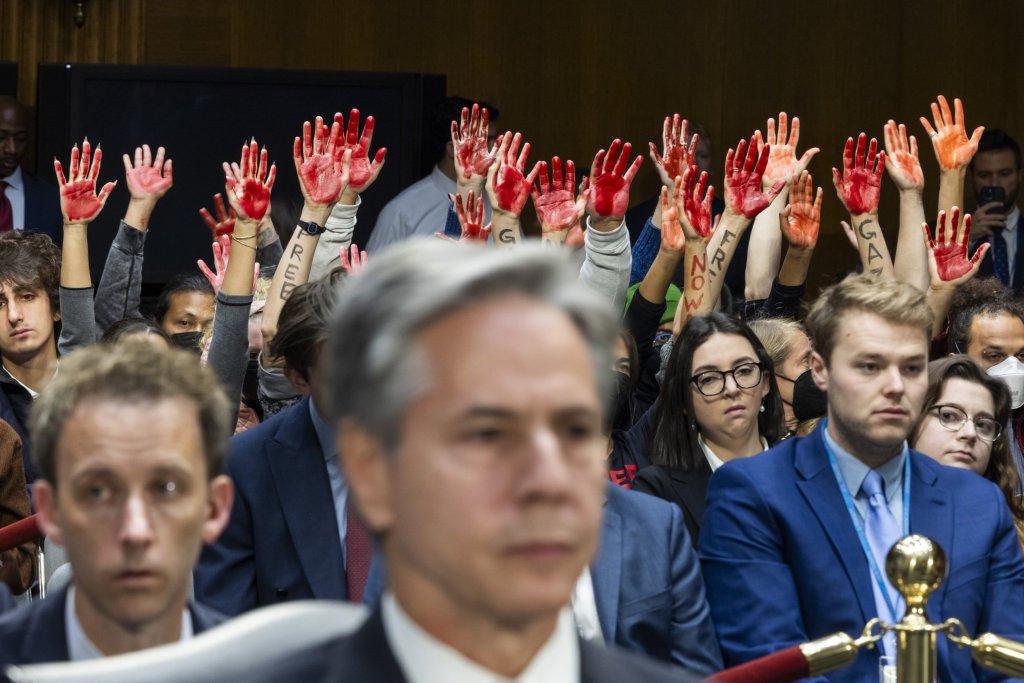
The Aqsa Flood attacks were considered so grave an infraction of Israeli security that the Pentagon received orders to immediately send an aircraft carrier and a battle group to the Mediterranean in support. It wasn’t long before a second aircraft carrier and its support joined the first. Secretary of State Blinken flew immediately to Israel to attend a restructuring of the Israeli government before shuttling between Cairo, Riyadh, Amman and Doha to negotiate a plan for ethnically cleansing Gaza.
The Qassam Brigades, in their intrepid mission, stumbled over more than just the computer files they downloaded, the weapons they stole and the 240 hostages they took. This was something also of far greater consequence than the four star military cadres they killed during the operation. They had flushed the rescue plans for an empire in trouble out into the open. If these plans seemed to have been in the works for some time, this is because they were inherited from the Trump administration when Jared Kushner, Trump’s son-in-law and longtime family friend of Netanyahu, had floated the idea of the “deal of the century.” The deal of the century would have involved paying the Palestinians to move to Sinai.
But now, as far as the Americans were concerned, the opportunity presented itself for a forced ethnic cleansing of Gaza. As the Israeli military lashed out brutally and comprehensively at Gazan civilians from the air, the plan crystallised in the form of a 13 October directive from the Israeli Ministry of Intelligence distributed to all personnel and dropped over Gaza, as follows:
1. A call on #Palestinian civilians to vacate north #Gaza and allow for land operations; 2. Sequential land operations from north to south Gaza; 3. Leaving routes open across Rafah; 4. Establishing “tent cities” in northern Sinai and the construction of cities to resettle Palestinians.
In her speech of 18 October, President of the European Commission Von der Leyen was clearly intent on pushing this plan forward by announcing an EU ‘Humanitarian Air Bridge to Egypt.’ These supplies would obviously require the opening of the Rafah Crossing between Gaza and Sinai.
This was not simply an act of kindness and concern for Palestinian civilians suddenly faced with total destruction. Within a month Israel’s air raids would have used the explosive equivalent of two atomic bombs. In fact, the central point in Von der Leyen’s speech addressed what she called the ‘major geopolitical implications‘ of this latest outburst of violence between Palestinians and Israelis and its negative implications on ‘the historic rapprochement between Israel and the Arab countries.’ That was the key takeaway, and it demonstrated that the EU and Von der Leyen were in on the plan for the Biden Corridor.

II. Why there is a “New Diplomacy” afoot that frames the actions of the Axis of Resistance in a different way from the past:
What were the geopolitical implications Von der Leyen referred to? Why the panic? America’s stock in the Middle East has been seriously eroded following two events. On March 10, China brokered a peace deal between Iran and Saudi Arabia. This caused a wave of heart attacks across the US foreign policy community, which had over the years carefully crafted the idea at the foundation of Middle Eastern empire-building that there are “Sunnis” and “Shias” and that they are like oil and vinegar. Egypt and Saudi Arabia were supposed to have been integral to an anti-Iranian Israeli axis across the Arab world to consolidate American imperial interests.
Then on August 24, the BRICS Group admitted six new members, four of whom are the key players in the Middle East, not just the parties to China’s Pece deal, Iran and Saudi Arabia, but also Egypt and the UAE. Jim O’Neill, the ex-Goldman Sachs employee who coined the term BRIC, before South Africa joined, as a mnemonic to aid his corporate clients’ investment plans, opined the very next day, that the move was meaningless in geopolitical terms. One of the myriad revelations from the lightning bolt that was the Aqsa Flood is that O’Neill is missing the point.
Having joined the BRICS, the actions of Iran, Saudi Arabia, Egypt and the UAE, when viewed in the context of the current Gazan crisis, have not beentypical. While the BRICS Group has no institutional structures and to expect any display of formal cohesive responses to international events is unwarranted, applying to join the group had a rationale for each of these Middle Eastern countries, especially in the light of the seminal Saudi-Iran peace deal brokered by China. Having created new bridges and relationships through BRICS, its members, new and old alike, are more likely to take a common stand on various issues of importance to them as they arise, whether the BRICS itself is the framework or not.
The initial concerted rebuff by Egypt, Saudi Arabia, Jordan and Qatar, of Blinken’s proposals for the relocation of Gazans, actually had little to do with the new diplomatic environment. Their reactions would have been the same even before the peace deal and the expansion of the BRICS.
In fact, the Blinken proposal had devastating security implications for all those regimes. One, the idea of shifting a radicalised population of 2 million people to Sinai was out of the question for an Egyptian régime already harbouring over 40,000 political prisoners in a slew of new prisons built with IMF money since Sisi’s 2013 military coup, as we shall see below, that had been backed by the United States in the first place. Two, Saudi Arabia’s flagship Neom project was located on Sinai’s borders and would depend on labour from Egypt, and as time passes this symbiosis would grow between Egypt and a Saudi Arabia looking to transcend its oil-bound economy. Egyptian stability would be crucial. Three, the precedent in Gaza would bode ill for Jordan, which fears its replication in the expulsion of West Bankers to Jordan. Four, Qatar and Turkey have formed a strategic diplomatic nexus that crucially incorporates Gaza.
So it wasn’t only the “Axis of Resistance” (Iran, Iraq’s populist forces, Syria, Hezbollah in Lebanon, Yemen and Hamas) that ascribed importance to Hamas’ survival, although the Axis was the movement that was prepared to use force to defend it. But now, in the new diplomatic environment, if it did use force to aid the Gazans, this would no longer be threatening for the Arab states. Despite the fact that the Gulf states, the UAE in particular, held the Muslim Brotherhood’s democratic form of Islam to be a threat to the legitimacy of their regimes, and that Hamas was regarded as being part of that idea, Iran successfully positioned itself in the negotiations over Gaza as being bringer of stability rather than revolution (the old Khomeinist doctrine). It must be said that Israel failure on the 7 October and its discomfited and unhinged reaction, thereafter, helped with this perception.
In a meeting of the Organization for Islamic Cooperation (OIC) on the 18 October, which it had organised, Saudi Arabia joined Iran in forcefully condemning Israel’s actions. Notably it had convened a meeting of Islamic states, rather than a meeting of the Arab league for this purpose. The cooperation between the two largest Gulf powers became even clearer when, in a subsequent tweet Iranian FM Hossein Amirabdollahian disclosed that he was sharing details of his ongoing discussions with Hamas and Hezbollah on the war, with Saudi Arabia.
Far from buckling under Israeli pressure in Gaza and reacting to the full extent of their military power, the measured response of Iran and Hezbollah reinforced the spirit of the new diplomacy. Hamas, an extremely important link in the asymmetric chain of resistance built up by Iran over the decades, was in serious danger of being destroyed by Israel. As the unprecedented scale of Israel’s bombing of Gaza continued, and the civilian death toll mounted, especially with Israel’s targeting of hospitals, a strong Iranian reaction was expected. But, apart from cryptic threats by Amirabdollahian, such as his ‘time is up’ message after Israel’s bombing of the Baptist Hospital in Gaza, the region witnessed a surprisingly sensitive deployment of the asymmetric forces Iran had built up over the decades.
The most explicit statement of Axis policy came in Hezbollah leader Hassan Nasrallah’s first speech of the war on 3 November. First, Nasrallah confirmed that the Al-Aqsa Flood of 7 October had been a surprise to the rest of the Axis members, and even to some factions within Gaza itself. Its success had depended on total secrecy being maintained on a need to know basis. Second, Hezbollah’s 8 October attack on Israeli forces in the illegally occupied Shebaa Farms, undertaken in support of Hamas, was a distinctively limited measure. This, and the reaction of the Hashd el-Shaabi in Iraq and the Houthi régime in Yemen were to be expressions of support for Hamas, taken independently in each case, according to local circumstances. There was and would be no Iranian coordination. The purpose would be to divert Israeli and American resources away from the action in Gaza, relieving somewhat he pressure on Hamas. Meanwhile, on all these actions, Amirabdollahian would keep Saudi Arabia informed.
This was a revolutionary repositioning for the Axis, and it did three things:
(i) First, in the context of the Chinese peace deal, it established the Axis of Resistance in the eyes of Arab states, not as a fearsome web of religiously motivated military groups exporting revolution (the Khomeini doctrine), but as a collection of local interests cooperating at a distance to support each other in the quest for stability in a region whose real destabilising factor was Israel and the United States.
(ii) Second, while the individual lethal actions of Axis members were an undoubted irritant that required the constant attention of Israel and the United States across the region, they never crossed the threshold of direct conflict that risked regional war. This kept the eyes of the world fixed on Israel’s extreme unethical action in Gaza. It also meant that the military success Hamas was expected to achieve according to the reports, would become a victory that would be attributable directly to the sacrifices of the Palestinians themselves.
(iii) Third, Iran, by keeping the peace in Western Asia in this extremely dangerous time, would rise in China’s estimation and acquire greater political weight within the growing Eurasian bloc. Russia and China did not want the Gazan war to widen to Iran.
That China had recently deployed what was at the time of the Gazan war the ‘preeminent naval force in the Gulf may have been planned before the start of the Gazan conflict. But it is nevertheless an indication of the ways things are changing. When Putin, coming out of meetings with Xi Jinping, told a press conference in reply to a question about Israel’s bombing of the Baptist Hospital that no one ‘wants the conflict to expand,’ or ‘turn it into a full-scale war,’ he meant that this what he has agreed with China and with Iran.
After the 18 October, OIC meeting in Riyadh, a further significant meeting occurred on 20 October, when Egypt hosted an international summit in Cairo attended by UN Secretary General Guterres and representatives of Western powers. In that meeting, the Arab states took their first united stand on the current situation, demanding a ceasefire, which the Western states, particularly the United States, the United Kingdom, France, Germany and Italy opposed (Spain, Ireland, and Belgium are alone in Europe in their condemnation of Israel’s actions in Gaza).
This was followed by a joint demand by the Arab states at the UN Security Council on 26 October, with Saudi Arabia, Bahrain, Egypt, Jordan, Qatar, Kuwait, Morocco, the United Arab Emirates, Oman, and Qatar, condemning of Israeli action in Gaza. Those countries then led a UN General Assembly vote demanding a cessation of the action, which won by 120-14. Kuwait and Qatar would always have voted that way. But Bahrain, the UAE, and Morocco (the recent “normalisers” under the Trump administration’s “Abraham Accords”) would not: for them the vote is significant.
Furthermore, however much Saudi leadership in the Arab world may of late have induced scepticism, there was no doubt that the firm leadership displayed by Saudi FM Faisal Farhan in the series of summits was an encouraging response to Iranian diplomacy. Many voices were raised against the failure of the Arab states to use the oil weapon to stop the onslaught on Gaza.
But this fails to see that in the modern world of complex sanctions and systemic organised sanctions evasion, an oil embargo against the United States would have failed to do anything except provide grist to Israel’s PR mill. Even if the oil weapon would succeed, it would rob the Palestinians of the military victory that they need to secure ultimate consent from the United States.

III: What exactly is the “Biden Corridor” and what does it involve?
Prior to the Al-Aqsa Flood game changer, Saudi Arabia was supposed to be the next country to so-called “normalise” relations with Israel. If, after these events, Saudi Arabia doesn’t establish formal diplomatic relations with Israel, then the Biden administration’s response to China’s Belt and Road Initiative (BRI), with an India-Middle East-Europe Economic Corridor (IMEEC) (“Biden Corridor”) is in jeopardy, as Von der Leyen said in her speech as she worried about the prospects for ‘the historic rapprochement between Israel and the Arab countries.’
But what is the Biden Corridor and what does it have to do with Gaza, and the evident desire of both the Trump and Biden administrations to empty it of its citizens?
The natural path of the Biden Corridor from India to Europe and on to the United States is through Ashdod, which accounts for about 40% of incoming and outgoing Israeli seaborne trade. Chevron’s offshore Tamar gas field, which produces 70% of the gas required to fuel Israel’s electricity generation needs connects with Ashdod. Should the Ben Gurion Canal go ahead, it would run from Eilat to Ashkelon. Ashdod and Ashkelon are next to Gaza. Then there is the whole question of how Palestinians are to exploit Gaza’s gas fields. Should there ever be a “Two State Solution,” then the Palestinians of Gaza would be an economic magnet and a more important factor economically than the West Bank. Gaza’s position at Egypt’s door would, furthermore, make it a major entrepot.
It is important to note that the same European states that staunchly backed Israel and the United States in the recent Cairo Summit on Gaza on 20 October against the Arab states, were same four countries (UK, France, Germany and Italy) that backed the 2013 military coup in Egypt. Italy was the first European country to formalise relations with Sisi as coup leader, right after ENI, the Italian oil and gas giant, announced that it had miraculously just found a massive gas field in Egyptian waters.

France, Germany, then Britain, subsequently formalised relations with Egypt’s coup leader for similar reasons. Blair, representing British Gas, backed the coup. British Gas was the biggest investor in Egypt at the time, and that the freely elected Morsi government was giving it a hard time about the negligible level of royalties it was paying. Since then, it has been revealed that the UK Foreign Office organised the deluge of propaganda emanating from Cairo that undermined the Morsi government.
We have to remember that President Morsi was ultimately formally arrested on charges of “colluding with the enemy” relating to the time he sent his officials to stop the November 2012 Israeli attack on Gaza. This interference with imperial matters sealed his fate as far as the United States was concerned: freely and democratically elected or not, Morsi would be toppled and die in prison from systematic denial of medical attention.
So the same European countries that backed the United States and Israel in the 2013 overthrow of the Morsi government have since joined the United States as the hard core of the Western opposition to Russia and China. Their geopolitical interests are rolled up in the success of IMEEC/Biden Corridor, as Von der Leyen made quite plain in her speech on behalf of the EU about the “humanitarian air bridge.”
But as Israel’s crazy onslaught on Gaza runs into the sand, the “Two State Solution” once again finds its way into White House discourse. This, as usual, is angled more as a threat to Israeli leaders and a sop to Biden’s democratic base, than a promise to Palestinians.
Today, the resistance had held. The forced ethnic cleansing plan has died as surely as the Deal of the Century fizzled out. After the initial panic that civilians in the northern section of Gaza felt when the crazy, mindless bombing started, there was the sudden realisation that they have all seen this before. Or rather they remembered something from the experiences of their parents and grandparents in the Naksa of 1967, when Israel’s so-called “pre-emptive war” (with all its precocious neoconservative connotations) led to Israel’s invasion of the West Bank, East Jerusalem, Gaza and Sinai. It didn’t take long, therefore, for Gazans in 2023 to understand that what was going on right now was a “new Naksa.” So they stopped leaving their homes. They decided to bear the pain. After all, what was is store for them anyway was either death or internment in a desert camp.
Irony of ironies, added to the refusal of Gazans to move, it would be the Egyptian president Sisi’s firm rejection of the Blinken ethnic cleansing plan that convinced the White House quite quickly that the plan was dead. Quite simply, as mentioned above, the political legacy of the 2013 Egyptian coup stood against the plan. Biden climbed down, and in phone calls with Sisi, he seemed to commit to the policy that ‘Palestinians in Gaza are not displaced to Egypt or any other nation.’ This didn’t stop him from continuing to support Israel’s apparent desire to totally wipe out Gaza. Imperial America is quite ready to contemplate genocide, as long as its leaders can find ways of mitigating the political cost at home and its proxies do not become ‘casualty averse.’ For Israelis as for Ukrainians, “the empire expects…” will be the subject of, not the next article, but the one after that.
The Gaza 2023 episode comes at the tail end therefore of a charged political environment. While it was instigated by Palestinians seeking their rights it had three important repercussions:
1. It has destroyed Israel’s reputation as a provider of regional security for the Gulf’s tyrannical Arab regimes. By contrast the fighters involved in Al-Aqsa Flood, displayed the tactics of regular armies and rather than those typical of resistance factions. They acted like combat forces, trained and in possession of modern tactical means, which allowed them to enter into battles in several Israeli towns and settlements at the same time. This new armed professionalism backed by the dogged support of civilians ultimately is the only language that the empire understands.
2. By virtue of Israel’s unhinged reaction, whether this was something predicted by Hamas or not, Israel lost credibility as a rational state actor. This, furthermore, must be understood in the context of a period in which Israel has displayed unprecedented institutional, political, and identity crisis, with severe polarization and great social division. This has been a cause of alarm among the “normalising” Gulf Arab states, voiced even by the UAE.
3. It provided a test of Iran’s New Diplomacy discussed above that emerges from the Chinese brokered peace deal with Saudi Arabia: a diplomacy which defused the image of the Axis of Resistance as a coordinated web of subversion and chiselled a sharper image for the grievances of its members as being focused on Israel, thus further disqualifying Israel as the paramount provider of security in the region.
This is a devastating outcome for the United States, which is lumbered by virtue of its internal politics with Israel as its primary ally in the Middle East North Africa (MENA) region. [Ref: Prt 11 Post-Script 14 -2; info@globalshiffft.com; © 2023]
The next article will discuss the Biden Corridor in the context of the broader geoeconomics of the waning neoliberal world disorder.
 Globalshiffft
Leave a comment